


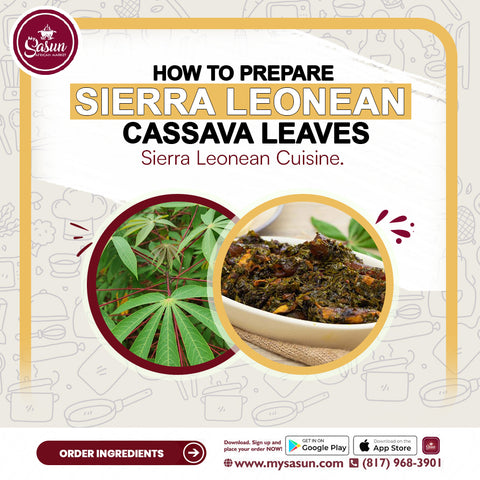
Cassava leaves are a beloved staple in Sierra Leonean cuisine. They are known for their rich, earthy flavor and nutrient-dense properties. Preparing this dish is an art that combines traditional methods, hearty ingredients, and lots of love. In this guide, we'll walk you through everything you need to know about preparing Sierra Leonean cassava leaves, including ingredients, cooking techniques, and tips for enhancing the dish’s flavor.

Introduction
Cassava leaves are an essential ingredient in Sierra Leonean cooking. They are often served as a rich, flavorful stew typically eaten with rice. This dish represents the heart of Sierra Leonean culture and is a staple in many homes. Preparing it the traditional way involves a combination of fresh ingredients, patience, and knowledge passed down through generations.
Cassava Leaves Ingredients
The foundation of any good cassava leaf dish lies in its ingredients. Here's what you’ll need:
Cassava Leaves: The star of the dish, these should be fresh, thoroughly washed, and finely blended.
Palm Oil: Gives the dish its characteristic red color and deep flavor.
Meat: Options include beef, chicken, goat, or a combination, depending on personal preference.
Smoked Fish: Adds a savory, umami flavor.
Seasonings and Spices: Onions, garlic, Maggi cubes, salt, and other traditional spices.

Tips to Note
- The quality of your cassava leaves is crucial. Choose leaves that are dark green and fresh. Once selected, wash the leaves thoroughly to remove any dirt or debris. After washing, finely chop or blend the leaves using a food processor. The finer the blend, the smoother the final dish will be.
- Cooking Sierra Leonean cassava leaves requires patience. The dish is typically slow-cooked over low heat to allow the flavors to develop fully. Boiling the blended leaves is the first step, followed by simmering with palm oil and the other ingredients.
- Palm oil is integral to the dish, giving it its distinctive red color and depth of flavor. Use high-quality, unrefined palm oil for the best results.
- Select high-quality cuts of meat. Goat meat and beef are popular choices. Ensure the meat is well-seasoned before adding it to the dish. Smoked fish, such as herring or mackerel, should be cleaned and deboned if necessary.
- Adjust Seasonings: Taste as you go and adjust the salt, pepper, and spices as needed.
- Use Stock: Instead of water, cook the cassava leaves in a flavorful stock to enhance the taste.
- Include Aromatics: Add bay leaves or fresh thyme for added aroma and depth.
Sierra Leonean Cassava Leaves Recipe
Here’s a detailed breakdown of how to prepare the dish:
Start with the Cassava Leaves: Boil the finely blended leaves with a little water until partially cooked.
Add Palm Oil: Pour in the palm oil and stir well.
Introduce Seasonings: Add diced onions, garlic, Maggi cubes, salt, and any other spices of choice.
Add Meat and Fish: Include the prepared meat and smoked fish.
Simmer Slowly: Reduce the heat and allow everything to cook slowly, stirring occasionally. Cook until the meat is tender and the oil begins to rise to the top.
Serve: Sierra Leonean cassava leaves are traditionally served with rice. You can also pair it with steamed yams or plantains for a complete meal.
N.B: Different regions in Sierra Leone have their own twists on cassava leaves. Some may add groundnuts (peanuts) or dried shrimp, while others might include additional vegetables like eggplant or okra.

Storing and Reheating Leftovers
This dish stores well and even tastes better the next day. Refrigerate leftovers in an airtight container for up to five days. Reheat gently on the stovetop, adding a splash of water if necessary.
Health Benefits of Cassava Leaves
Cassava leaves are packed with essential nutrients, including vitamins A and C, iron, and protein. This dish is both nourishing and satisfying, making it a staple in Sierra Leonean households.
Common Mistakes to Avoid
When preparing cassava leaves, avoid these pitfalls:
Overcooking: Prolonged cooking can make the dish lose its vibrant color and taste bitter.
Using Too Little Oil: Palm oil is essential for balancing the bitterness of the leaves.
Undercooking the Meat: Ensure the meat is fully cooked and tender before serving.
FAQs About Sierra Leonean Cassava Leaves
Q1: Can I use dried cassava leaves instead of fresh ones?
A1: Fresh leaves are preferred for the best flavor, but dried leaves can be used in a pinch. They need to be rehydrated and cooked longer.
Q2: Is palm oil necessary for the dish?
A2: Yes, palm oil is crucial for authentic flavor and balancing the bitterness of the leaves.
Q3: Can I make cassava leaves without meat?
A3: Yes, for a vegetarian option, simply omit the meat and use additional smoked fish or mushrooms.
Q4: How do I remove the bitterness from the leaves?
A4: Thoroughly wash and finely blend the leaves. Cooking with enough palm oil also helps reduce bitterness.
Q5: How long should I cook the cassava leaves?
A5: The dish usually takes 1.5 to 2 hours to cook on low heat, allowing the flavors to fully develop.
Q6: Can cassava leaves be frozen?
A6: Yes, you can freeze cooked cassava leaves for up to three months. Thaw in the refrigerator before reheating.


Comments (2)
If you suffer from the herpes virus infection no worries; I want to help people figure out what they have and what helped me to completely eradicate the Herpes virus infection.
I had unprotected sex and a few days later felt sick thinking I was just hungover. After spending a day at the beach I felt like I had severe sun exhaustion. For the next three days, I had a bad fever off and on. I noticed what I thought was a canker sore inside my lower lip. I started to suspect I had herpes.
I searched online and called different clinics and few days later I was in the midst of a full blown outbreak! Sores all over my labia and anus and mouth. I became very, very depressed and was even thinking of suicide.
I started to try everything I could find online. None of these remedies had any visible results.
Finally, I found a naturopathic doctor, who honestly told me I should contact Dr. Utu for my condition and recommended the herpes herbal cleanser.
I ordered the Herpes Herbal Cleanser through a DHL Express courier and started treatment
Within two days I started seeing good results with only one sore left on my genitals and my mouth was all healed.
I completed the herbal treatment under Dr Utu guidance and he asked me to go do a blood test which I curiously did
I got the results of my blood test and can’t believe that I tested negative for HSV2 and negative for HSV1
People still cure herpes infection with herbal medicine and even other more deadly diseases with lifestyle changes and herbal medicine
While there are bad doctors and bad physicians in clinics and online, there are also the good ones and Dr Utu is one of the best.
Dr Utu can only be reached at
drutuherbalcure@gmail.com
My heart is so filled with joy. If you are suffering from Erectile dysfunction or any other disease you can contact Dr. Moses Buba on this buba.herbalmiraclemedicine@gmail.com or His website : https://www.facebook.com/profile.php?id=61559577240930 . For more information from me reach me via WhatsApp : +44 7375 301397